Showing posts with label Books. Show all posts

Thursday, June 2, 2016

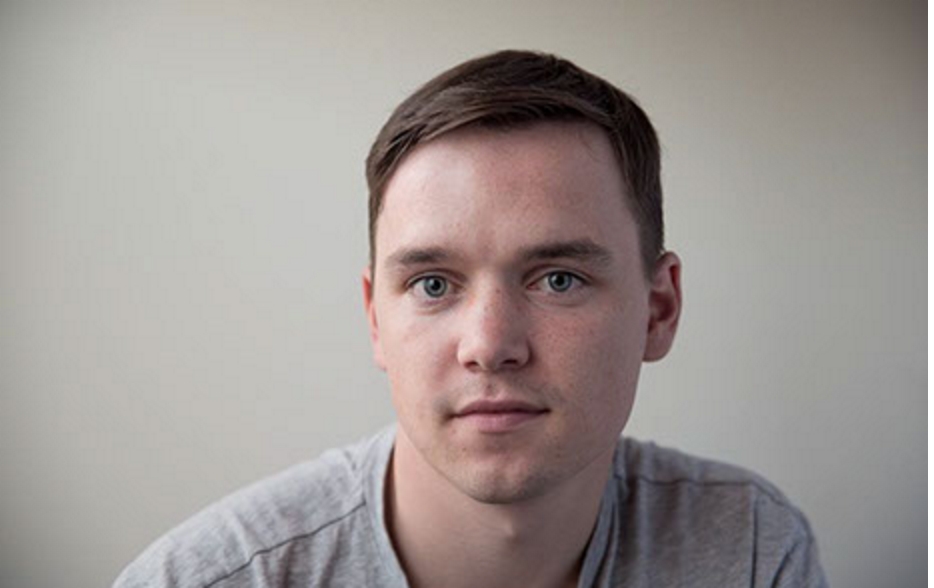
People Profile: Nicholas Madden


To those who know Nicholas Madden, have spoken to him about his passions, or witnessed one of his famed 21st speeches, it is abundantly clear that the man has a way with words. 

Therefore, the fact that at just 21 years of age he is now the author of his first novel, The Three Crowns, is both unsurprising and wildly impressive. Nicholas creates a world of fantasy in his novel, brimming with war, sorcery, betrayal and revolution. 

This ability to translate such complex concepts into a tangible form for others to read and imagine is intriguing to me, therefore I was keen to gain an understanding of how The Three Crowns came to be including Nick's inspirations, motivations and creative process.

The first five chapters of this novel are currently available to be read on his website.

-Beth
When did you start writing The Three Crowns, and how has it evolved? 
I started writing The Three Crowns about two years ago now, and it began as an idea I had one night before I fell asleep. The idea was about a slave who needs to help his Emperor. I put it in my notes on my phone, then went to sleep. The next day I started writing it. It really started to evolve into what it is now after I created the map. When I created the map, I felt like exploring other areas of the world and one by one other characters were added. Pretty soon I just couldn’t stop writing. From the beginning I never really planned anything out, the story just shaped itself as I kept going. It kind of snowballed into the book I have now. 

Why fantasy? 
I love history. If I wasn’t doing what I’m doing, then I’d probably be studying to be a history teacher. But with fantasy, I can write my own history, and it’s incredibly liberating, but more importantly, it’s fun. To be able to invent a world where history is whatever I say it is, is a weird thing, but it’s enjoyable and rewarding.

Do you think you’ll ever write non-fantasy? 
Yes, I think so. Fantasy has a lot of advantages, there’s so much you can do with it. However I’ll follow a good story where ever it leads.  

Who is someone you have been influenced by? 
Tolkien is my hero. So is Martin, even though his greatest work isn’t finished yet. I also find influence across a lot of different storytelling mediums. I love movies, and my favourite director of all time is probably Hayao Miyazaki. He’s one of the main reasons I wanted to write fantasy. 

When are you most productive/creative? 
I think in the hour before I go to sleep. Mainly because I’ll realise how tired I am, and I have to hurry up and finish whatever’s in front of me. It also helps that the house is quiet at that time.

Who do you look up to? 
I think my Grandfather has always been a man who will set his sights on something, and make sure it gets done. He does whatever it takes to make it happen. That’s the way I want to approach life. He also still works at the moment, and that level of dedication is incredible. 

As a child, what did you love more than anything? 
That’s a tough one. I enjoyed everything as a kid. But I guess so much of that had to do with the kind of environment I grew up in. We lived in the best neighbourhood. We were always out on the street, going from house to house, and everyone’s front door was always open. It was a great time to be a kid, growing up like that. We didn’t need much encouragement to stay outside. There was a creek out the back of our street, and we spent heaps of time hanging around there. There was always something to do. I loved everything about it. 

What fascinates you? 
People fascinate me. People are interesting. The way people connect is amazing to think about for just a moment. A lot of things fascinate me, but there’s few things as interesting as the fact that there are so many people in the world and everyone has a story to tell. 

What is one thing you want to achieve? 
I think to get through life doing something you care about is important. I also think it’s important to find something that makes you useful. So I’m not sure if I’m cheating and that’s two achievements, but to care about what I’m doing and make it useful to others is what I want to do. 

How can we find out more about you? 
Feel free to jump on the website: www.nicholasmadden.com or keep up to date through the Facebook page: www.facebook.com/Nicholas-Madden-1761724314059062/


Thursday, July 23, 2015

A thriller, a fantasy, and a lesson in life and love.

Over the past three weeks I have done about 50 flying hours. Between the bad chicken salads and many episodes of 'VEEP', I managed to fit in a fair amount of reading. The following books were my three holiday reads, each very different in genre, but all equally enjoyable.

The Girl on the Train - Paula Hawkins:
You were just getting over ‘Gone Girl’, you thought it was finally safe to start trusting people again, but oh how wrong you were…  In the latest book to become an instant cult book club read, Paula Hawkins' thriller 'The Girl on the Train' proves no one is as they seem, and the only person in this world you can truly trust is yourself (no, I'm not exaggerating).

In a nutshell, the plot revolves around the experiences of three female characters - Rachel, Anna and Megan, whose lives are complexly intertwined by lies, misunderstandings, murder, and a conveniently placed train line. The book challenges how we view those around us, and our tendency to fantasise when - for the most part - all we get are passing glances. While at points the timeline was a little hard to follow, jumping between characters and experiences spaced months apart, Hawkins had me hooked right for the start and I was finished in a couple of days.


Stadust - Neil Gaiman:
I fell in love with the film 'Stardust' years ago and have since seen it many, MANY times, but it wasn't until a few weeks ago that I decided to pick up the original book. It's very rare for a book or film from the fantasy genre to capture my attention but I just adore 'Stardust' in both forms. 

There are subtle differences in the plot between film and novel but essentially, a young man named Tristan sets out on a grand adventure to find a fallen star in an attempt to win the heart of a girl in his town. In the magical town of Wall the star takes the form of a woman and many are after her. Unicorns, witches, royalty and murder all feature but perhaps it's the simple love story that's so captivating.

At only 194 pages it's a short and snappy read and I could definitely seeing it being a perfect mid-semester distraction, save the lengthy 'War and Peace' style plot.


Us - David Nicholls:

David Nicholls' 'One Day' is one of my all time favourite novels, so perhaps I was slightly biased going into it but I just love Nicholls' writing voice. One night Douglas Petersen discovers that his wife of over 20 years has decided to leave him, but not before journeying around Europe on a grand tour to provide their son with a grand cultural experience. Their travels take them to London and back, and between all the galleries and art pieces they discover themselves.

It may be my inner 40 year old but I was surprised by how well I was able to connect with the the middle aged, male, scientist protagonist. Largely his conflict between his desire to stay in his comfort zone vs. the artistic and impulsive attitudes of his wife and son.
 

Across his work, David Nicholls seems to truly capture what it is to grow up, and grow old*, expressing it in the most eloquent and quotable way.

 *At 19, I can admit I say this with absolutely no authority.


- Miriam

* Mosaik does not take credit for the images used in this article

Thursday, March 5, 2015

'The Examined Life' Book Review.

Stephen Grosz's The Examined Life is to me one of those books that will stay in my memory for a long time due to it's real-ness and how captivating I found it. I think I read it in about three days. This simple story of just over 200 pages is not quite a 'story' in the narrative sense, but rather a variety of recounts of the interactions between a psychoanalyst (Grosz) and his wide variety of patients over his 25 years of practice. For me, the book spoke many truths about the way we are affected by the people and events of our past and present and some of the concealed feelings behind day to day behaviour. It lead me to think like a psychoanalyst, quietly assessing the personality traits of myself and others, attributing them to a variety of causes and coming to some pretty profound conclusions.

Each short chapter of the book recounts a new person's story under the wider themes of 'Beginnings', 'Telling Lies', 'Loving', 'Changing' and 'Leaving'. Why people can feel in love with people they don't even know, why a little boy with learning difficulties continued to spit in the face of adults around him, why a gay professor didn't realise his sexuality until well into his 70s, and why some feelings of paranoia can protect us from a more dangerous feeling - that nobody cares about us.

An example from the book that I particularly enjoyed was Grosz's story of 'Abby' whose parents had "cut [her] out of their lives" after she had started dating a blonde Catholic, 'Patrick'. Her Jewish father was terribly racist towards her boyfriend (who she eventually married) and her parents went on to ignore all correspondence with their daughter for years at her fathers request, even after the announcement of their first grandchild. This story continued to say that after 16 years Abby discovered that her father had been having an affair all this time with his receptionist -who was blonde and Catholic.

Grosz went on to say how Abby's father's actions towards Patrick could be explained by a concept psychoanalysts call 'splitting'- "an unconscious strategy that aims to keep us ignorant of feelings in ourselves that we are unable to tolerate. Typically, we want to see ourselves as good, and put those aspects of ourselves that we find shameful into another person or group".
Through 'splitting' Abby's father was ultimately directing all disapproval and hatred for his own acts into his daughter dating Patrick. As Abby concludes, "the bigger the front, the bigger the back".

This book provides new ideas on why we, as humans do what we do; and any book that causes you to think in a deeper way and be more understanding of those around you is, in my opinion, undoubtedly worth the read.


-B


*Mosaik takes no credit for any of the images or quotes used in this article*


Thursday, January 8, 2015

Not That Kind of Girl.

Lena Dunham is not that type of girl and nor will she ever be; she is the creator, writer, director and star of HBO's award winning TV show GIRLS ... and she is also friends with Taylor Swift (that should really be included on her Wikipedia page under achievements).

If you do not know who Dunham is but you once watched a season, an episode or even just five minutes of GIRLS then she was probably the naked one or the one self diagnosing herself with rare diseases via Google. Dunham has always allowed herself to be an open book and now she is literally an open book (well she's written a book that you can open). 

I bought Not That Kind of Girl within three days of it being released, as did most girls who are looking for some type of guidance or a way to feel a little bit better about the many mistakes they've made thus far as the blurb promises to  "prevent you from having the kind of sex where you feel you must keep your sneakers on in case you want to run away."

I read the book in an attempt to feel better about some of my not-so-great choices and instead ended up relating to it a whole lot more then I ever wanted to admit. The collection of essays that make up this book are hilarious and at the same time tragic, with titles like:

Take My Virginity (No Really, Take It), 
18 Unlikely Things I've Said Flirtatiously, 
My Internet Boyfriend Died And So Can Yours, 
Who Moved My Uterus?,
13 Things I've Learned Are Not Okay To Say To Friends, 
Guide To Running Away.

You laugh and you cringe through this entire book because Dunham presents us with life, no gimmicks, no embellishments, just twenty-something-year-olds trying to simultaneously survive the perils of university and Tinder. 

-A

*Mosaik does not take any credit for the images used in this article

Tuesday, September 30, 2014

Palo Alto.

I selected Palo Alto Stories off my bookshelf the other day for four reasons: 

1) It has some of the worst reviews ever (people actually hated this book) and I felt up for a challenge
2) It had an aesthetically pleasing front cover, so even if the book was bad I could just stare at the front and pretend I was reading.
3) There was a huge amount of hype about the movie adaptation, written and masterfully directed by Gia Coppola (and lord knows I love any movie directed by a Coppola)
4) I was super ill and needed to be entertained

Palo Alto is a series of short stories written and curated by James Franco. Many of the stories are loosely based around Franco's adolescence and his time at Palo Alto High School. 

Franco depicts the most unsettling portrait of his teenage hood, one that is still relevant, as each story realistically captures the detachment and indifference that teenagers use to approach and get through life. Each character lives only for the moment. The book portrays the unsettling feeling we get when we finally enter the adult world and realise how truly messed up adulthood is. Generations of us have experienced it and Franco suggests the staleness of it all. 

I read this book in the space of a day. I loved it and at the end of every story I was left staring at the page trying to recollect myself, because I related, in some way, to every short glimpse of those teenagers lives. If I and so many others I know loved it, why then did the book get such bad reviews? It was honest and shocking. I couldn't help but think that it was simply because it had been written by James Franco, the reviews weren't critiquing the stories, they were questioning his authenticity as an author. 

After finishing the book I watched Gia Coppola's movie, starring Emma Roberts, James Franco, Nat Wolff and Jack Kilmer. It was equally incredible to the book.
I was interested to see how Coppola would translate the short stories into a film and she did it effortlessly, carefully selecting and adapting them to create a continuum.  Coppola was chosen by Franco to direct the film after he saw a collection of her photography, and the collaboration resulted in a perfect nostalgic aesthetic. Wolff and Roberts characters stand out as their performances are unnerving and thought provoking.

Palo Alto allows you to enter into the complexities of life, not to part take, but to observe. It shocks you because you know it is real.


-A


Tuesday, September 2, 2014

Melbourne Writers Festival -The Garden at Stonefields

Sometimes, when we go into something blind, we can have the most surprisingly brilliant experiences... and sometimes we find ourselves being the youngest in a room of those seeking gardening advice.

On the weekend I saw one of Australia's leading landscape designers, Paul Bangay speak about The Garden At Stonefields at an Illustrated Talk during the Melbourne Writers' Festival. The question and answer session displayed that he was a fascinating man with a lot of visible ambition and expertise in his field. It was just unfortunate that his field (no pun intended) was something in which I currently have not much interest at all. And it didn't help that I couldn't understand the complicated names for the species of plants and didn't really need to know what type of box hedge would grow successfully in my area.

In fear of sounding down on the whole experience, I want to point out that I love a good garden and appreciate the beauty that can be created with natural materials but I feel it will be an interest that may come later in life. I did, however, draw some positivity and relevance from the talk to consider in my current life.

The first thing that struck me was what he said about the fact that through travel, you get exposed to things that you start to want for yourself.  Bangay was talking about this idea in relation to how he travels extensively for his work and therefore never has a full sense of accomplishment within his work as he has seen so much and always feels he wants to do more with his gardens. Opening yourself up to the world leaves you knowing what kind of beauty is possible. I think this extends to any kind of design practice; you never seem to be entirely satisfied because you have seen better while researching and seeing the work of others and always feel you can do better. I'm not sure whether I classify this as a positive or negative.

Another thing that I gained from the talk was the saddened way Paul Bangay spoke of the growing obsession that we in Australia have with perfection. He was referring to the fact that gardens often look unfinished because they are manicured to perfection. There are no vines growing on the houses or the pavers don't have the character that broken or chipped pavers do and there seems to be a compulsive need to 'protect' the house in fears that contact with greenery will destroy all that is man made. I think this fear also resonates to broader life in regards to the relationship between our created world and nature and the growing dichotomy between the two.

Although I may not read them for many years, Paul Bangay is an author of many books including Paul Bangay's Garden Design Handbook, The Boxed Garden and Paul Bangay's Guide to Plants and if you are looking for garden design inspiration, his work is truly beautiful.
That much I can understand.

-B


*Mosaik does not take credit for any of the images used in this article

Sunday, August 31, 2014

Melbourne Writers Festival- Design Matters.

Design and the business of communication, was discussed yesterday at the Melbourne Writer's Festival in a conversation with Debbie Millman, an American writer and designer and Stuart Harrison, an architect and freelance design writer, both of whom run radio podcasts about design, and appreciate the candidness of conversation. 

The crux of the entire discussion was design's purpose in our contemporary world. 
This topic was perhaps one of the most interesting ones I have seen discussed at MWF because as a textile design student, I constantly ponder over the purpose of design and whether it is actually beneficial or if it is just a waste of resources? - Does it actually improve our quality of life? Does aesthetic matter? What is its direct effect on society?

I was so glad to witness two leading advocates of design answer the questions I have wondered over the last few years.  Millman and Harrison talked about how "the condition of design reflects the condition of our culture" as they discussed branding, sustainability, arts influence on design aesthetic and the ultimate subjectivity of design. 

My favourite moment of the lecture was when someone from the audience asked "Is design important?" a question for me that is not dissimilar to "what is the meaning of life?" as I think this is the question so many designers and artists ask themselves, and I think Millman answered it perfectly when she said that design is "the language that we use to understand the visual reality of the world" as it is ultimately "shorthand for reality, experience and humanity."
Thinking about it further, design started at the same time as civilisation, it is something we as humans do naturally, to survive and to improve life for ourselves and others, so inevitably it must be a reflection of our civilisation. 

As the talk came to an end my eye wondered around Deakins Edge, the lecture theatre that I have been lucky enough to sit in for many of the MWF talks. As the natural light filled the theatre, Deakins Edge seemed to contribute to the debate, as Harrison pointed out that as we had sat there, having a conversation about design and its effect on society, people walked past, allowing our thoughts to not be held in that room alone but rather with the world beyond it.

Because that is what design concerns itself with, the natural and the human world.

-A


*Mosaik does not take credit for any of the images used in this article

Monday, August 25, 2014

Melbourne Writers Festival - Reading Fashion.

This weekend I had the privilege of attending the Reading Fashion event at Melbourne Writers Festival. Based on the NGV exhibition Fashion Detective, the panel comprised of three women - exhibition curator Danielle Whitfield, conservator Bronwyn Cosgrove, and author Sulari Gentill. The discussion covered topics related to forensics and fiction; how preserved clothing can tell people so much about a certain period in time, a historical figure, a society, or a significant event. 
What seemed like a ping-pong match of panel members bouncing off one another's comments, the Reading Fashion conversation was so intriguing to witness. Whitfield's overwhelming knowledge on the preservation of garments, teamed with Cosgrove's humorous recollections of the laboratory work that is involved in dissecting and researching the materials, made the conversation informative, but not too much to take in. 
Listening to author Sulari Gentill speak was perhaps my favourite part of the conversation. Her blatant honesty about writing organically - 'solving the mystery as [she goes] along' - and her ties to Australian crime writing made her such a valuable presence in the room. The thing that I thought was so beautiful was when - during question time at the end of the conversation - an audience member asked Gentill how she gains inspiration for the vivid descriptions of clothing she provides in her stories. The audience assumed that Gentill visited museums and researched images, but our assumptions were incorrect. Gentill explained that her descriptions come from the mind. She continued to explain that every individual reader would imagine a different garment to the next person as a result of personal experiences and prior knowledge; and that's the beauty of writing. 
***
“Fakes and forgeries, poisonous dyes, concealed clues, mysterious marks and missing persons, NGV exhibition Fashion Detective looks to the collection as a body of ‘material’ evidence." - National Gallery of Victoria.
Unlike your usual exhibition, Fashion Detective combines both fact and fiction to present a fascinating and chilling journey of fashion through time, and the mystery behind seemingly unassuming garments. Four of Australia's best crime writers worked on speculating the evidence at-hand, introducing plots and characters to reveal fashion's substance and context. 
The Fashion Detective exhibition is running at the National Gallery of Victoria until Sunday 31st August, and is open all days, except Mondays, from 10am-5pm. It’s free entry, and there is a 'parlour' room for the little ones to play in, too! Get in quick - you won't regret it. 
-N

The Victorine Blog owns this photo 

To Hot or Not owns this photo